
Bhutan: The Kingdom That Measures Happiness
Landing in Paro Nestled between India and Tibet, a Himalayan kingdom has chosen to measure its happiness rather than the number of tourists. Traveling to Bhutan means agreeing to slow down, looking up at the dzongs, and letting yourself be guided by those who live there. First comes the descent. The plane glides between the ridges, skims the blue pine forests, and makes one final turn over the terraced rice fields. Then the Paro Valley opens up like the palm of a hand. On the tarmac, the air is fragrant with resin and juniper smoke. The terminal resembles a temple, with its painted woodwork and arched windows. Here, even an airport seems to have been designed to ensure nothing is rushed. Your guide is waiting for you, dressed in the traditional gho, a white scarf in hand as a sign of welcome. The journey begins at her own pace: that of a country that has opened its doors to the world only cautiously and intends to keep them ajar.
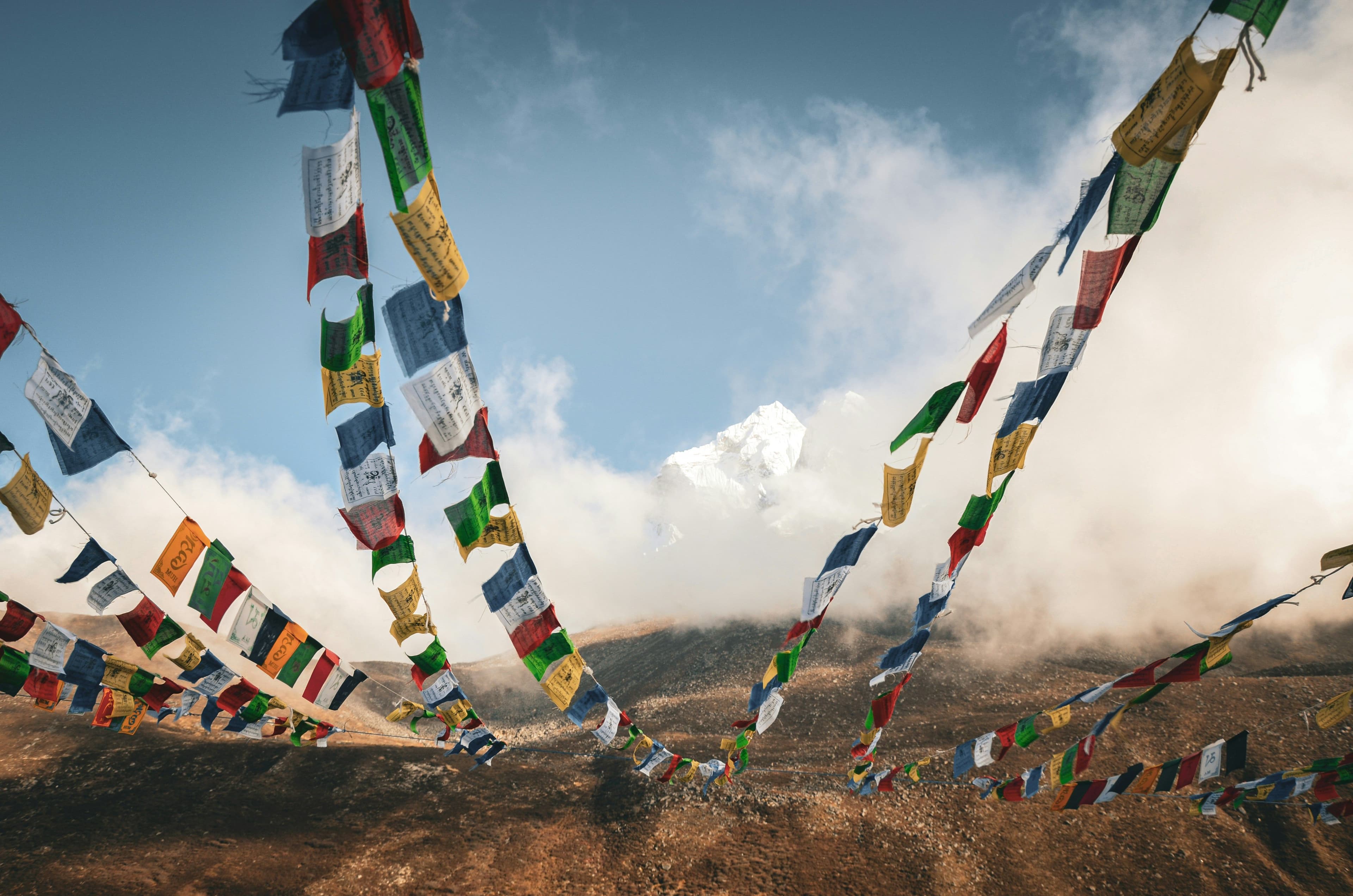
The Itinerary — From One Valley to Another Paro, the Tiger’s Nest: You must set out at dawn for Taktsang. The trail climbs through the forest, past prayer flags and water mills spinning without anyone there. After two or three hours of walking, the monastery comes into view, clinging to the cliff nearly 900 meters above the valley. Legend has it that Guru Rinpoche arrived there on the back of a tiger. We don’t ask for proof. We sit down, catch our breath, and realize why some places need no explanation.
Thimphu, a capital city without traffic lights: Thimphu has no traffic lights: a traffic officer directs traffic with a gloved hand from a painted guardhouse. We explore the capital on foot, from the weekend market to the workshops of the School of Thirteen Arts, where young artisans learn thangka painting and woodcarving. In the evening, the Tashichho Dzong is illuminated by the river. Monks walk through it in silence, their burgundy robes standing out against the white stone.
Punakha, the gentle valley: Passing through the Dochula Pass and its 108 chörten, the road descends into gentler landscapes. In Punakha, orange and banana trees line the rice paddies. The dzong, situated at the confluence of two rivers, is undoubtedly the most beautiful in the country. In the spring, jacaranda trees blanket it in a shade of mauve. You cross the suspension bridge, linger in the courtyards, and listen to the trumpets echoing at prayer time.
Phobjikha, the Valley of the Cranes: Higher in elevation and wilder, the glacial valley of Phobjikha welcomes black-necked cranes from Tibet every winter. The villagers celebrate their arrival with a festival at Gangtey Monastery. We spend the night on a farm or in a guesthouse, near a wood-burning stove. We take a walk through the damp meadows at dawn, before the fog has decided to lift.
Bumthang, the spiritual heart: Further east, Bumthang encompasses four valleys and some of the kingdom’s oldest temples. This is the Bhutan of yak cheese, buckwheat fields, and apple orchards. Few travelers venture there. And that’s exactly why you should go.
The art of traveling in Bhutan with a local guide.
Take your time: Bhutan is the antithesis of rushed itineraries. The mountain roads are slow, the passes numerous, and that’s exactly how it should be. Plan on ten to twelve days to travel from the western valleys to Bumthang at a leisurely pace.
The local guide, a bridge to understanding: Every international traveler is accompanied by a licensed guide and a driver. Far from being a constraint, this is the key to the journey: the guide interprets local customs, explains the murals, and opens the door to a farmhouse for a cup of salted butter tea.
Encounters: An archery contest among villagers on Sundays, accompanied by singing and dancing when an arrow hits the target. An evening at a local’s home around a hot stone bath, the dotsho. A tsechu, a religious festival during which masked dancers twirl in the dzong’s courtyard before the entire village in grand style.
At the table: Here, chili peppers aren’t a condiment—they’re a vegetable. Ema datshi, a chili and cheese stew, is the national dish. It’s served with red rice and steaming momos, and the meal ends with a glass of ara, the local alcohol made from rice or corn.

